Moles

Introduction
Introduction
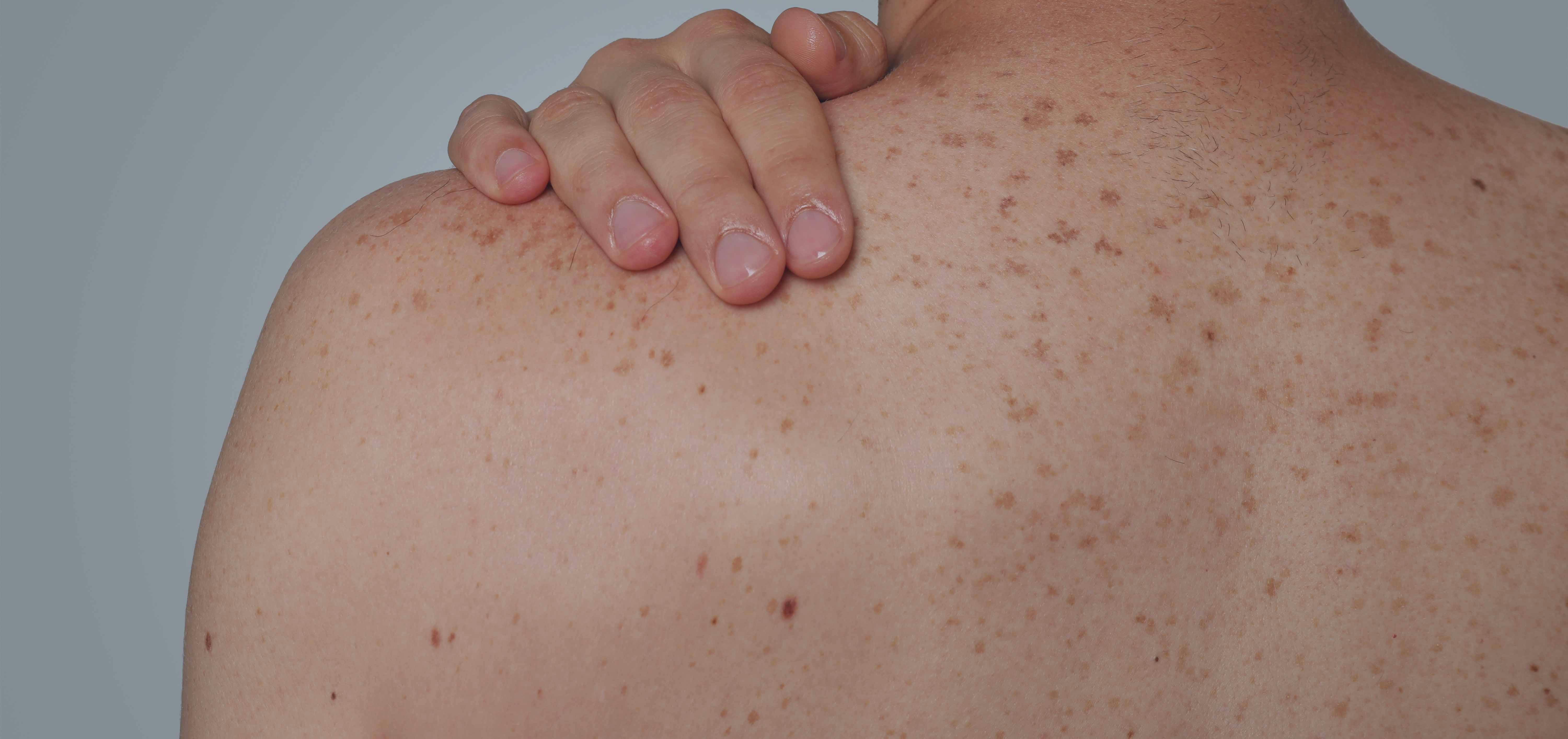
A mole, or nevus, is a mass of brown cells that typically appears on the skin or mucous membranes. Known as melanocytes, these cells are responsible for skin darkening. Children do not have moles at birth. They begin to appear between six months and one year and continue to develop into adulthood.
A nevus is most commonly characterised as a brown spot or small pink or brown mass that appears in the first decades of life. Areas exposed to the sun often have more moles.
A benign mole is usually symmetrical, homogeneous (one colour, evenly distributed), with regular edges, giving it a round or oval appearance and a diameter of less than 6 millimetres.

Causes
Causes
The number and nature of nevi are largely determined by genetic predisposition. Exposure to UV rays is the most common external cause.
The sun promotes the appearance of nevi, but also melanoma, follow these tips:
- Stay in the shade between 11 am and 3 pm.
- Wear a hat, sunglasses and covering clothing.
- Use sunscreen.
- Avoid tanning beds.

Treatments
Treatments
Most moles are benign and do not require removal. Depending on their appearance and location, some nevi may even be considered a beauty mark, hence their name! Unsightly moles or those located in areas of friction with clothing can be removed under local anaesthesia.
To rule out melanoma, i.e., a cancerous lesion, a biopsy should be considered if nevi have certain characteristics:
- A: Asymmetry, asymmetrical appearance.
- B: Irregular edges (i.e., not round or oval).
- C: Colour, a change in colour within the mole or a colour significantly different or darker than other moles on the person.
- D: Diameter, a diameter greater than 6 millimetres.
- E: Evolution, a new mole in a person under 30 years old or a mole that is changing.
In these situations, medical consultation is required.

Attention
Attention
A single mole has a small probability of becoming malignant (lifetime risk is approximately 1 in 3000 to 10,000), however, people with a large number of benign moles mathematically have an increased risk of developing melanoma.
Fair-skinned individuals, those with freckles, or numerous moles should consult a dermatologist to determine if regular monitoring is necessary, as well as older individuals and those with a family history of melanoma.

For more information
For more information
Additional information can be found on the page Mole in the Wikipedia encyclopaedia and in the article Which mole is dangerous? in the Swiss Medical Forum journal.